Akwa Ibom Advances Fiscal Sustainability Through 2026–2028 MTEF Public Hearing
On Thursday, 4 September 2025, the Akwa Ibom State House of Assembly convened a public hearing on the 2026–2028 Medium-Term Expenditure Framework and Fiscal Strategy Paper (MTEF/FSP), an annual event that has become integral to promoting participatory governance within the state.
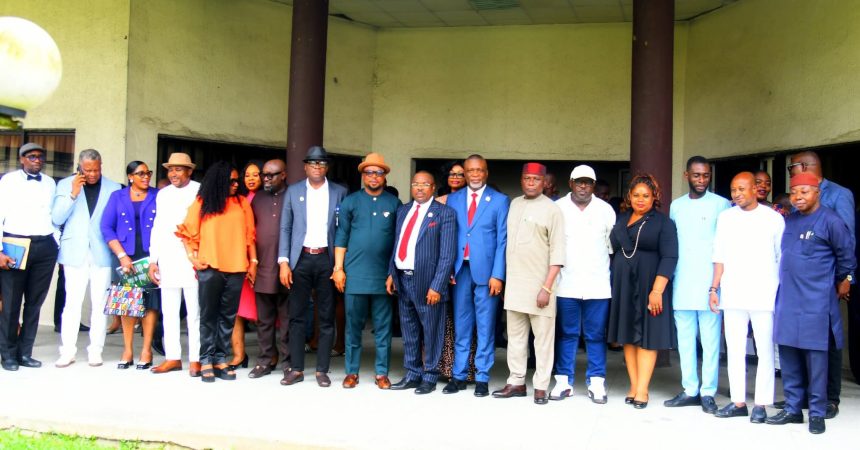
Organised by the House Committee on Economic Planning and Development, the hearing brought together legislators, government representatives, civil society organisations, and development partners to review and contribute to the state’s fiscal blueprint.

The Speaker of the House, Rt. Hon. (Elder) Udeme Otong, was represented by Hon. (Dcn) Lawrence Udoide, member for INI State Constituency, who officially opened the proceeding. He described the MTEF as a crucial economic tool for sound financial stewardship and long-term developmental planning, reaffirming the Assembly’s dedication to maintaining the process in accordance with international best practices.
In his address, the Honourable Commissioner for Budget and Economic Planning, Dr. Nsikan Linus Nkan, who led the preparation of the framework, emphasised that the 2026–2028 MTEF is intended as a roadmap to fiscal discipline, revenue enhancement, and inclusive growth. He outlined key fiscal targets such as maintaining a 30:70 ratio of recurrent to capital expenditure, increasing Internally Generated Revenue (IGR) by a minimum of 25 percent annually, prioritising ongoing projects, and ensuring that borrowed funds are allocated solely to capital projects and human capital development.
Dr. Nkan remarked, “This framework is more than a financial plan; it represents a commitment to transparency, inclusiveness, and sustainable progress.” He highlighted that the document mirrors contributions from citizens, civil society, the private sector, and development partners. He further noted Governor His Excellency Pastor Umo Eno’s ground-breaking participatory budgeting initiatives, which included town hall consultations across all federal constituencies to ensure government priorities align with the people’s needs.
The three-year fiscal projections forecast total revenue—comprising the opening balance—to grow from ₦1.65 trillion in 2026 to ₦1.89 trillion by 2028. Corresponding expenditure forecasts have been designed to stimulate capital development and diversify the economy.
Key stakeholder groups, including the Centre for Human Rights and Accountability Network, the NUJ Akwa Ibom State Council, the Clement Isong Foundation, and Policy Alert, submitted commendations for the inclusive process while contributing insights on fiscal discipline, accountability, and citizen welfare.
Hon. (Dr.) Nsidibe Akata, Chairman of the House Committee on Economic Planning and Development, praised the Executive for timely submission of the MTEF document and assured participants that recommendations from the hearing would inform the legislature’s work on the 2026 budget.
Speaking as a keynote speaker, the Commissioner for Finance, Mr. Emem Almond Bob, acknowledged the framework as a product of thorough inter-agency collaboration involving the Ministries of Budget and Economic Planning, the Fiscal Responsibility Board, the Accountant General’s Office, the Internal Revenue Service, and the Debt Management Office. He asserted that the MTEF positions Akwa Ibom towards long-term fiscal sustainability amid growing global and national economic uncertainties.
The Attorney General and Commissioner for Justice, Uko Udom SAN, represented by Sifon Ubong Esq., lauded the legislature’s enforcement of the Fiscal Responsibility Law, describing the hearing as both a legal and economic imperative.
Described by many as an “intellectual engagement,” the public hearing reaffirmed Akwa Ibom’s steadfast commitment to participatory governance and fiscal prudence. It also highlighted the pivotal leadership role of the Ministry of Budget and Economic Planning in steering the state towards sustained economic growth through strategic planning and inclusive policymaking.